
Table of Contents
- Why Med Spa Prices Vary So Much
- The Real Cost of Safety and Regulatory Compliance
- Medical Director Requirements for Med Spas: The Hidden Expense
- Equipment, Products, and Technology: Where Your Money Goes
- Med Spa Treatment Red Flags: When a Deal Is Too Good to Be True
- The ‘You Get What You Pay For’ Risk Assessment
- How to Evaluate Med Spa Prices Without Sacrificing Quality
- Conclusion: Making an Informed Choice
- Frequently Asked Questions
Last Updated: October 4, 2026
Why Med Spa Prices Vary So Much
Med spa prices vary because the cost of delivering a treatment safely is not the same everywhere. Two clinics can advertise the same dermal filler or laser session, yet one charges noticeably more. The difference usually comes down to who performs the treatment, what they use, and how carefully they manage risk. At Gentle Glow MedSpa, we see this constantly: patients compare quotes without comparing what sits behind them.
A lower price is not automatically a red flag, and a higher one is not automatically fair. What matters is whether the price reflects real clinical value or simply a nicer waiting room.
Below, we break down the cost drivers that separate a bargain from a genuine value, and how to tell which is which.
The Real Cost of Safety and Regulatory Compliance
Safety and regulatory compliance is the single largest hidden cost in medical aesthetics, and it is the one patients never see on a menu board. Running a legitimate med spa means meeting state licensing requirements, maintaining a sterile environment, and carrying malpractice insurance. Those are fixed costs that a discounted operator often trims first.
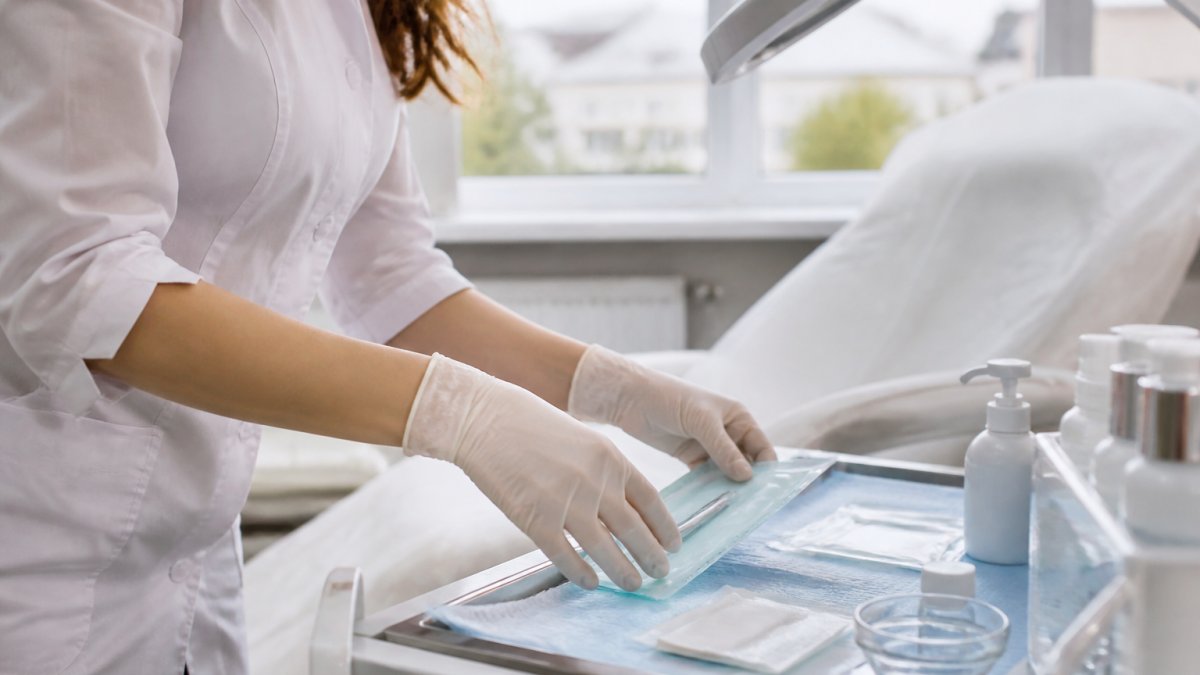
A treatment room that meets clinical standards, single-use needles, proper waste disposal, and documented protocols all carry a price. When a clinic undercuts everyone else by a wide margin, the savings have to come from somewhere. Usually it is oversight, not efficiency.
If a provider cannot tell you who their medical director is or what their licensing looks like, that is your signal to walk away. The consequence is not just a bad result; it is treatment by someone operating outside their scope of practice.
Medical Director Requirements for Med Spas: The Hidden Expense
Medical director requirements for med spas are a cost most patients never consider, and they are one of the clearest reasons two clinics can quote wildly different prices for the same injection.
That oversight is not a signature on a form. It is paid time, and it shows up in your price.
What clinical oversight actually involves
A functioning medical director relationship typically includes:
- Protocols and standing orders: Written treatment parameters that specify which products, doses, and techniques each provider may use, and when they must escalate to the physician.
- Chart review: Periodic auditing of patient records to confirm consent, dosing, and documentation meet the standard of care. Some states set a minimum review percentage; others leave it to the physician’s judgment.
- Availability requirements: Rules on how quickly the supervising physician must be reachable, or physically present, when a complication arises.
- Delegation agreements: State-specific documents that define exactly which procedures a given license type may perform without direct supervision.
Each of those carries a real cost. A physician who reviews charts, signs off on protocols, and stays reachable is being paid for their time and their license, and that expense is baked into every legitimate price.
Why scope of practice rules change the math
Scope of practice rules vary by state, and they determine who is legally allowed to inject, operate a laser, or perform a given procedure. A registered nurse, a nurse practitioner, and a physician all operate under different rules, and the level of required supervision differs accordingly.
The practical effect: a clinic that staffs only the most independent, highest-licensed providers pays more per hour but needs less supervision overhead. A clinic that staffs less-licensed providers under heavy supervision pays for that supervision instead. Either way, the cost is real, and a clinic that skips or minimizes oversight can advertise lower rates precisely because it has removed that line item.
The risk you are actually buying down
When oversight is thin, the failure mode is not cosmetic. It is a provider working outside their scope of practice, no one qualified on site when a vascular occlusion or an allergic reaction occurs, and no documented protocol to follow. The price difference between two clinics is often the difference between having a physician reachable in minutes and having no one to call.
Questions that reveal the real oversight model
- Who is the medical director, and are they physically on site or available remotely?
- Which license type will perform my treatment, and what supervision does state law require for it?
- What happens if I have a complication after hours?
- Can I see the delegation agreement or protocol that covers my procedure?
A clinic that answers these clearly is paying for oversight and passing a fair share of it to you. A clinic that dodges them has likely found a cheaper way to operate, and you are the one carrying the risk.
Equipment, Products, and Technology: Where Your Money Goes
Equipment and product sourcing explain a large share of the gap between quotes, and this is where the cheapest clinics quietly change the equation. Medical-grade devices and FDA-approved products cost more than the alternatives, and reputable clinics buy from authorized distributors rather than gray-market resellers.
The product supply chain, explained
Authentic dermal fillers and neurotoxins move through a controlled chain: manufacturer to authorized distributor to licensed clinic, with lot tracking and cold-chain requirements at every step. That chain exists for a reason, these are injectable medical products, and temperature excursions or counterfeit vials can cause complications that a discount does not cover.
Cheaper alternatives enter through three doors:
- Gray-market resellers: Product diverted from other countries or from clinics that over-ordered, often without valid U.S. tracking. It may be genuine, it may not, and you usually cannot tell.
- Counterfeit or diluted product: Vials cut with saline or unapproved filler to stretch volume. The result is shorter-lasting, uneven, and occasionally dangerous.
- Expired or improperly stored stock: Product that sat past its date or outside its temperature range. Potency drops, and so does your result.
A clinic buying through these channels can cut its product cost by a wide margin, and pass a fraction of that saving to you while keeping the rest.
Why the device matters as much as the product
Medical-grade lasers, radiofrequency platforms, and microneedling devices are not commodities. A newer platform with better safety controls, calibrated energy delivery, and built-in cooling costs more to buy and far more to maintain than an aging unit. Maintenance is the hidden cost: laser systems require periodic calibration, replacement of consumable tips and handpieces, and service contracts to keep energy output within safe parameters.
A clinic that skips calibration or reuses single-use tips is not being efficient. It is transferring risk to your skin. Under-calibrated or over-driven devices are a common cause of burns, blistering, and post-inflammatory hyperpigmentation, the exact complications that show up weeks after a bargain treatment.
Consumables add up per visit
Single-use sterile supplies, numbing agents, cannulas versus needles, and post-procedure care all carry a per-visit cost. A clinic that reuses what should be discarded, or substitutes a lower-grade numbing agent, shaves dollars off each appointment. Those dollars come out of your safety margin, not the clinic’s profit.
What most guides miss: the skill is the product
The product itself is only part of the cost. The skill to place it correctly, the judgment to know how much and where, and the training to recognize and manage a complication are what you are really paying for.
When you compare quotes, ask which specific products and devices are used, whether they come from authorized U.S. distributors, and how the device is maintained. A clinic that can answer without hesitation is charging for quality you can verify. A clinic that cannot is charging for something else.
How to verify sourcing before you book
- Ask for the brand name of the product, not just the category.
- Ask whether the clinic purchases through authorized distributors and can show lot numbers.
- Ask when the device was last calibrated and serviced.
- Ask whether tips and needles are single-use.
None of these questions are unreasonable. The clinics worth your money answer them every time.
Med Spa Treatment Red Flags: When a Deal Is Too Good to Be True
Med spa treatment red flags tend to cluster around pricing that does not add up. A price far below the local market is the most common one, but it is rarely alone.
Watch for these:
- Prices that are dramatically lower than every other clinic nearby
- No clear answer about who performs the treatment or their credentials
- Pressure to buy a package or prepay before a consultation
- Vague or missing information about the products used
- No discussion of risks, aftercare, or what to expect
A legitimate provider welcomes questions about credentials, products, and safety. Evasiveness is the tell.
The ‘You Get What You Pay For’ Risk Assessment
The “you get what you pay for” risk assessment is not about snobbery; it is about understanding what a discount trades away. When a clinic cuts price, it usually cuts one of four things: provider expertise, product quality, safety protocols, or time with you.
| What Gets Cut | How It Shows Up | Your Risk |
|---|---|---|
| Provider expertise | Less training, less oversight | Poor or uneven aesthetic outcomes |
| Product quality | Gray-market or diluted product | Complications, short-lived results |
| Safety protocols | Rushed sterile technique | Infection, hyperpigmentation risk |
| Consultation time | Quick, one-size-fits-all plan | Results that do not suit your face |
None of these risks are visible on a price list. That is exactly why they are easy to hide.
How to Evaluate Med Spa Prices Without Sacrificing Quality
Evaluating med spa prices comes down to asking better questions, not hunting for the cheapest number. Value-based pricing means the price reflects the skill, products, and safety behind the treatment, not just the treatment itself.
A practical way to compare:
- Ask who will perform your treatment and what their certification and scope of practice are
- Ask which products and devices they use, and whether they are FDA-approved
- Ask about the medical director and clinical oversight
- Ask what a personalized treatment plan looks like for your goals
- Ask about post-procedure care and what happens if you have a concern
A clinic that answers all five clearly is worth the difference. A clinic that dodges them is telling you something.
Conclusion: Making an Informed Choice
Price is a signal, not a verdict. The clinics worth your trust are the ones that can explain exactly where your money goes and why. If you want that transparency from a team that builds personalized plans around your goals rather than a menu, Gentle Glow MedSpa offers dermal fillers, microneedling, and laser wellness treatments with a precision-based approach and a focus on natural-looking results. Book a consultation and get answers to every question above before you commit.
Frequently Asked Questions
What are the red flags to look for when choosing a med spa?
Watch for prices that seem too low compared to other local providers, treatments offered by staff without clear medical credentials, a lack of visible licensing or facility accreditation, and pressure to book without a consultation. A reputable med spa will answer questions about who performs your treatment, what products they use, and what safety protocols are in place. If any of these details are vague, that is a warning sign.
Does the level of medical supervision affect med spa pricing?
Yes. States set medical director requirements for med spas, and meeting those standards adds cost. A qualified medical director provides clinical oversight, ensures regulatory compliance, and is available for complications. This raises overhead expenses, which shows up in pricing. A med spa with weak or absent supervision may charge less, but you are accepting more risk.
Why is there such a wide price range for the same aesthetic procedure?
The price reflects what goes into the treatment: the cost of medical-grade products versus retail alternatives, the type and maintenance of medical-grade equipment, the credentials of the injector or practitioner, malpractice insurance, and the safety standards maintained. A lower price often means corners are cut somewhere, whether in product sourcing, equipment quality, or the level of clinical oversight.
What should I consider beyond price when booking a cosmetic treatment?
Look at the provider’s credentials and experience, the facility’s accreditation and safety record, whether a consultation is included, and how personalized the treatment plan is. Ask about post-procedure care and what happens if you have a complication. A lower price is not a bargain if the results are poor or the environment is not safe. Prioritize quality assurance and patient safety.