
Table of Contents
- Why Patients Seek Alternatives to Anara Medspa for Fillers
- How to Choose a Med Spa for Fillers That Matches Your Goals
- Questions to Ask Before Getting Dermal Fillers
- Dermal Filler Consultation Checklist for Your First Visit
- Understanding Filler Types and Treatment Areas
- How Long Do Dermal Fillers Last and What to Expect
- Beyond Fillers: Other Aesthetic Treatments Worth Considering
- What Sets a Premium Med Spa Apart: Provider Credentials and Medical Oversight
- Frequently Asked Questions
Last Updated: October 11, 2026
Why Patients Seek Alternatives to Anara Medspa for Fillers
Alternatives to Anara Medspa fillers exist because patients have different priorities: some want personalized care, transparent pricing, and a provider who listens to their aesthetic goals rather than pushing a standard treatment plan.
When exploring alternatives to Anara Medspa fillers, you’ll find that not every med spa delivers the same experience. Some prioritize volume over artistry or lack medical oversight. At Gentle Glow MedSpa, we understand that patients may have had unsatisfying experiences elsewhere, overly puffy results, rushed consultations, treatments mismatched to their goals.
The best med spa combines clinical expertise with genuine attention to your goals and comfort level.
How to Choose a Med Spa for Fillers That Matches Your Goals
Choosing a med spa requires more than checking reviews. The provider you select will reshape your face, so the decision deserves real consideration.
Clarify what you want: subtle refinement or dramatic volume? One area or overall balance? Write this down before your consultation. Providers who understand your vision, not their own, are worth your attention.
Look for medical oversight. The best med spas operate under physician supervision or employ credentialed nurse injectors. This is a safety requirement, injectors without proper credentials increase your risk of complications.
Ask about filler types and customization. A provider who discusses which filler suits your skin type, treatment area, and desired outcome demonstrates expertise. Generic recommendations raise red flags.
Trust your gut about the consultation. Did the injector listen, explain risks, and respect your budget? Rushed appointments or pressure to add treatments signal a transactional relationship, not a partnership.
Questions to Ask Before Getting Dermal Fillers
Before you commit to any filler treatment, ask these questions during your consultation. The answers will reveal whether a provider prioritizes your safety and satisfaction.
About the injector: What are their credentials? How many procedures have they performed? Are they supervised by a physician? Legitimate providers are proud to share qualifications.
About the procedure: What filler type and why? How long does it last? What swelling or bruising should I expect? A thoughtful answer shows the injector has considered your anatomy.
About aftercare and results: When will I see final results? What activities should I avoid? Do you offer touch-ups? How do you handle complications?
About reversibility: If I don’t like the results, what options do I have? (Hyaluronic acid fillers can be dissolved with hyaluronidase; other types are not reversible.)
About cost: What’s included in the price? Are touch-ups covered? Do you offer package pricing for multiple areas? Are there financing options? Transparency about cost prevents surprises at checkout.
Dermal Filler Consultation Checklist for Your First Visit
Prepare for your consultation with this checklist. Bringing photos and asking the right questions will help you and your provider align on expectations.
- Bring current photos of your face from different angles
- Bring photos of results you admire (celebrity or otherwise) to show your aesthetic preference
- Write down your specific concerns: loss of volume, fine lines, asymmetry, etc.
- List any allergies or medical conditions
- Bring a list of medications and supplements you’re taking
- Ask to see before-and-after photos from actual patients (not stock images)
- Request to speak with or read reviews from recent patients
- Confirm the injector’s credentials and experience level
- Ask about the specific filler brands and why they’re recommended for you
- Clarify the total cost, including any potential touch-ups
- Discuss realistic timelines for seeing results and how long they’ll last
- Ask about the provider’s complication rate and how they handle problems
- Confirm aftercare instructions and activity restrictions
- Get everything in writing: treatment plan, cost, and expected outcomes
Request a patch test or small trial area if you’re nervous about filler for the first time. A skilled injector can place a modest amount in one cheek or a small lip section to show you the result before committing to a full treatment plan.
Understanding Filler Types and Treatment Areas
Not all fillers work the same way, and not all are appropriate for every facial area. Understanding the differences helps you make an informed choice and sets realistic expectations for your results.
Lip Fillers and Lip Enhancement
Lip fillers reshape and volumize lips. Hyaluronic acid fillers dominate because they’re reversible, integrate naturally, and adjust easily if needed.
The ideal approach adds volume while preserving natural structure and movement. Over-filling creates the “duck lip” appearance patients regret. Best results look like an enhanced version of your own lips.
Lip fillers typically last 6-12 months. Aftercare matters: avoid hot beverages, intense exercise, and aggressive lip products for 24-48 hours.
Cheek Fillers and Facial Contouring
Cheek fillers restore age-related volume loss, creating defined cheekbones and lift. A skilled injector uses filler strategically to restore balance and proportion, not just add volume.
Cheek enhancement can also support a more youthful overall facial structure by lifting sagging skin and restoring the natural contours of youth. When combined with other treatments like microneedling or laser therapy, cheek fillers contribute to a comprehensive facial rejuvenation plan.
Cheek fillers typically last 12-18 months because this area has less muscle movement than the lips. Results appear gradually over several days as swelling subsides, so patience is important.
Chin and Jaw Augmentation
Chin and jaw fillers reshape the lower face, creating definition or enhancing a receding chin. This treatment requires precise anatomical knowledge because the chin and jaw influence overall facial balance and profile.
A well-placed chin filler can make your entire face appear more proportionate without surgery. Jaw fillers define the jawline and can create a subtle lifting effect across the lower face. These treatments work especially well for patients who want facial contouring without the commitment or recovery time of surgical augmentation.
Chin and jaw fillers typically last 12-18 months. Results are visible immediately but continue to improve as swelling settles over 1-2 weeks.
The most natural-looking filler results come from providers who prioritize facial balance and proportion over volume alone. Your injector should discuss how filler in one area affects the overall harmony of your face, not just fill the area you requested.
How Long Do Dermal Fillers Last and What to Expect
Dermal filler longevity depends on the filler type, treatment area, and your individual metabolism. Understanding realistic timelines prevents disappointment and helps you plan for maintenance.
Hyaluronic acid fillers, the most common type, typically last 6-12 months in the lips and 12-18 months in the cheeks and chin. Your body gradually breaks down the filler through a natural metabolic process.
Calcium hydroxylapatite fillers last longer, typically 12-18 months, because they stimulate your body’s natural collagen production alongside providing immediate volume. Poly-L-lactic acid fillers can last 24 months or longer because they work gradually, building collagen over time rather than providing instant results.
Immediately after your filler appointment, expect mild swelling, redness, and possible bruising. These side effects peak within 24-48 hours and typically resolve within a week. Avoid strenuous exercise, heat exposure, and alcohol for the first 24-48 hours to minimize swelling.
Most patients see their final results after 2 weeks when all swelling has resolved. Some fillers continue to settle and improve slightly over 4-6 weeks. Plan your filler appointment at least two weeks before any major events to ensure you look your best.
Avoid getting fillers right before travel or important events. Unexpected swelling or bruising could affect your appearance for several days. Schedule treatments when you have flexibility in your schedule and can take it easy for a few days if needed.
Beyond Fillers: Other Aesthetic Treatments Worth Considering
Dermal fillers address volume loss, but they’re just one tool in a comprehensive aesthetic approach. Many patients see better, longer-lasting results when they combine fillers with complementary treatments that address different aspects of aging.
Botox and Injectable Treatments
Botox works differently than fillers. While fillers add volume to restore lost fullness, Botox relaxes muscles that create dynamic wrinkles, those lines that form when you move your face. Combining fillers with Botox often produces more natural results than either treatment alone.
Botox is ideal for preventing new wrinkles and softening existing ones on the forehead, between the brows, and around the eyes. Results appear gradually over 3-7 days and continue to improve for two weeks. Botox typically lasts 3-4 months.
Many patients use fillers for volume restoration and Botox for expression lines. This combination approach addresses multiple signs of aging with precision.
Microneedling and Skin Rejuvenation
Microneedling creates controlled micro-injuries that trigger your skin’s natural healing response, stimulating collagen production. This treatment improves skin texture, reduces fine lines, and enhances the appearance of scars or enlarged pores.
Microneedling works beautifully alongside fillers. While fillers restore volume, microneedling improves skin quality and elasticity. Many providers recommend starting with a series of microneedling treatments before or after filler appointments to maximize overall results.
Results from microneedling appear gradually over 4-6 weeks as collagen rebuilds. Most patients need 3-4 treatments spaced 4-6 weeks apart for optimal results.
Laser Treatments and Cosmetic Laser Services
Laser treatments address sun damage, age spots, uneven skin tone, and texture irregularities. Different laser wavelengths target different skin concerns. Some lasers stimulate collagen production while others remove damaged skin layers.
Laser treatments pair well with fillers in a comprehensive facial rejuvenation plan. While fillers restore volume and structure, lasers improve skin quality and radiance. Together, they create a refreshed, youthful appearance that looks naturally enhanced rather than overdone.
Recovery from laser treatments varies by intensity. Lighter laser facials require minimal downtime, while more aggressive treatments may involve redness or peeling for several days.
What Sets a Premium Med Spa Apart: Provider Credentials and Medical Oversight
The difference between a premium med spa and a discount provider comes down to credentials, training, and medical oversight. This distinction directly affects your safety and results.
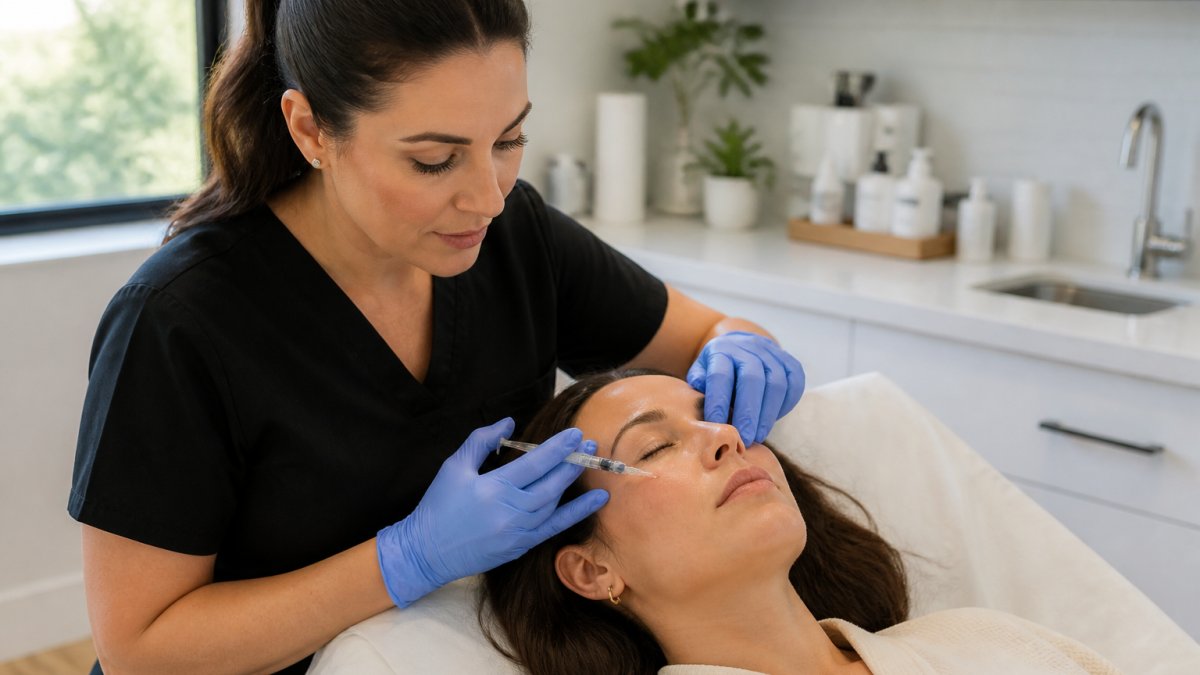
A premium med spa operates under physician supervision or employs injectors with extensive formal training in facial anatomy, injection techniques, and complication management.
Medical oversight means a physician reviews treatment plans, supervises complex cases, and is available if complications arise. This structure protects you.
At Gentle Glow MedSpa, our precision-based approach combines artistic vision with clinical expertise. Every treatment plan is customized to your unique facial structure and goals.
Premium med spas also invest in ongoing education. Aesthetics evolves, new filler formulations, injection techniques, and safety protocols emerge regularly. Providers committed to excellence stay current through continuing education and professional development.
Finally, premium providers maintain transparent communication about risks. They don’t promise perfection or painless procedures. They explain what’s realistic, what’s possible, and what requires caution. This honesty builds trust and prevents disappointment.
Finding the right provider for dermal fillers is one of the most important decisions in your aesthetic journey.
Frequently Asked Questions
What should I look for when choosing a med spa for dermal fillers?
Look for a provider with qualified injectors, a practice that prioritizes professional oversight, and a portfolio of before-and-after photos showing natural-looking results. Ask about their experience with your specific treatment area, the filler brands they use, and whether they customize treatment plans to your goals. A reputable med spa will spend time understanding what you want rather than pushing expensive procedures.
How long do dermal fillers last, and do I need ongoing treatments?
Most dermal fillers last between 6 to 18 months, depending on the product, your metabolism, and the treatment area. Lip fillers typically last 6 to 12 months, while cheek and chin fillers may last 12 to 18 months. Many patients choose maintenance appointments to sustain results, but this is entirely optional. Your provider should discuss realistic timelines during your consultation.
What are the risks and side effects of dermal fillers?
Common temporary side effects include swelling, bruising, redness, and tenderness at the injection site, usually resolving within a few days. Rare complications can include infection, allergic reaction, or asymmetry. Choosing an experienced, qualified injector significantly reduces these risks. Always discuss your medical history and any allergies with your provider before treatment, and follow their aftercare instructions carefully.
What questions should I ask before getting dermal fillers?
Ask about the injector’s credentials and experience, the specific filler brand and why they recommend it for you, realistic results and timeline, potential risks and side effects, cost and what’s included, aftercare instructions, and whether results are reversible if needed. Request before-and-after photos of patients with similar goals. A good provider will answer all questions thoroughly and never pressure you into a treatment.