
Last Updated: October 25, 2026
Quick Summary
Yes, microneedling painful is a common beginner concern, but most people describe it as manageable rather than unbearable. You will feel prickling, scratching, or vibrating pressure, and numbing cream, adjustable needle depth, and an experienced provider change the experience dramatically.
- Most providers apply lidocaine numbing cream 20 to 30 minutes before treatment.
- Cosmetic microneedling typically runs from about 0.25 mm to 1.5 mm in needle depth.
- The forehead and jawline tend to be more sensitive than the cheeks.
- A first visit usually runs 45 to 75 minutes, with treatment taking 20 to 40 minutes.
- Visible redness typically lasts 24 to 72 hours after treatment.
Table of Contents
- Is Microneedling Painful for Beginners? The Honest Answer
- What Does Microneedling Feel Like During Treatment?
- How Microneedling Numbing Cream Changes the Experience
- Your First Session, Step by Step: Consultation to Aftercare
- Microneedling Recovery Time: What to Expect After Treatment
- Microneedling Aftercare: A Simple Day-by-Day Plan
- Traditional vs RF Microneedling: Which Hurts More?
- Book Your First Microneedling Consultation at Gentle Glow MedSpa
- Frequently Asked Questions
Is Microneedling Painful for Beginners? The Honest Answer
Yes, microneedling painful is a common concern, but most beginners describe it as manageable rather than unbearable. The honest answer is that sensation varies widely from person to person. A microneedling session creates controlled micro-injuries that trigger collagen and elastin production, as described in a 2024 dermatology review of microneedling applications and devices. Those tiny punctures are why you feel something. One industry source reports that 38% of prospective patients cite moderate pain as a barrier to treatment, though that figure comes from a marketing page without published survey details, so treat it as directional rather than definitive.
The good news: numbing cream, adjustable needle depth, and an experienced provider change the experience dramatically.
Below, we walk you through exactly what each stage feels like, from consultation to aftercare, so you know what to expect before you book.
What Does Microneedling Feel Like During Treatment?
Most people describe microneedling as prickling, scratching, or a vibrating pressure against the skin. The device moves across your face in quick passes, and you feel each pass as a light sting rather than a sharp jab. It is not a relaxing facial, but it is not surgery either. Providers commonly call the sensation “well-tolerated,” meaning most patients finish without needing to stop.
A first-person account in Allure’s microneedling pain report notes there is always some level of discomfort, with intensity varying by person. Reddit users echo that range: one called it painful, another rated it about a 1 out of 10 after numbing. Those are anecdotes, not data, but they capture the real spread.
What Actually Drives the Sensation
Four factors explain most of the variation beginners notice:
- Needle depth: Cosmetic microneedling typically runs from about 0.25 mm to 1.5 mm, and deeper passes feel sharper. Depth is chosen for your concern, fine lines and texture often need shallower settings than scarring or laxity.
- Device type: Traditional microneedling uses needles alone. RF microneedling adds radiofrequency energy at the tip, which introduces a warm, sometimes sharper pulse. Motorized pens deliver rapid vertical strokes; roller devices drag slightly more.
- Pass count: Providers often make two to four passes per zone. The first pass is usually the most noticeable; later passes over numbed, already-treated skin often feel milder.
- Individual factors: Anxiety, poor sleep, caffeine intake, hormonal fluctuations, and prior needle experiences all shift how you perceive the same setting. Highly anxious patients often report more discomfort even at identical depths.
Sensations by Treatment Area and Needle Depth
Where we treat and how deep we go both change what you feel. The forehead and jawline tend to be more sensitive. Cheeks and the outer face usually feel milder. Deeper needle depth means more sensation, and that depth is chosen for your concern, not for comfort alone.
- Forehead: thinner skin, more tenderness
- Jawline and chin: firm pressure, occasional sharp spots
- Cheeks: generally the most comfortable zone
- Around the nose and upper lip: sensitive, brief passes
- Neck: variable, often mild
If you have a low pain threshold, consider starting with a shallower depth and a single pass per zone. You can always add intensity at a later session once you know how your skin responds.
How Microneedling Numbing Cream Changes the Experience
Topical numbing cream is the single biggest factor in comfort, and it is standard for a professional session. Most providers apply a lidocaine-based anesthetic 20 to 30 minutes before treatment, then remove it before the device touches your skin. With proper numbing, many patients rate discomfort low. For practical ways to stay comfortable beyond numbing cream, see these microneedling pain management tips for beginners.
When Numbing Cream Does Not Work Well Enough
Sometimes numbing underperforms, and that is worth planning for. If you feel sharp pain rather than pressure, tell your provider immediately. They can pause, add time under the numbing agent, or adjust needle depth. Skipping a numbing step, arriving with irritated skin, or taking certain medications can all reduce how well the cream works. Speak up early.
Your First Session, Step by Step: Consultation to Aftercare
Here is what a first visit looks like from start to finish, with the decision points and check-ins that matter most for comfort.
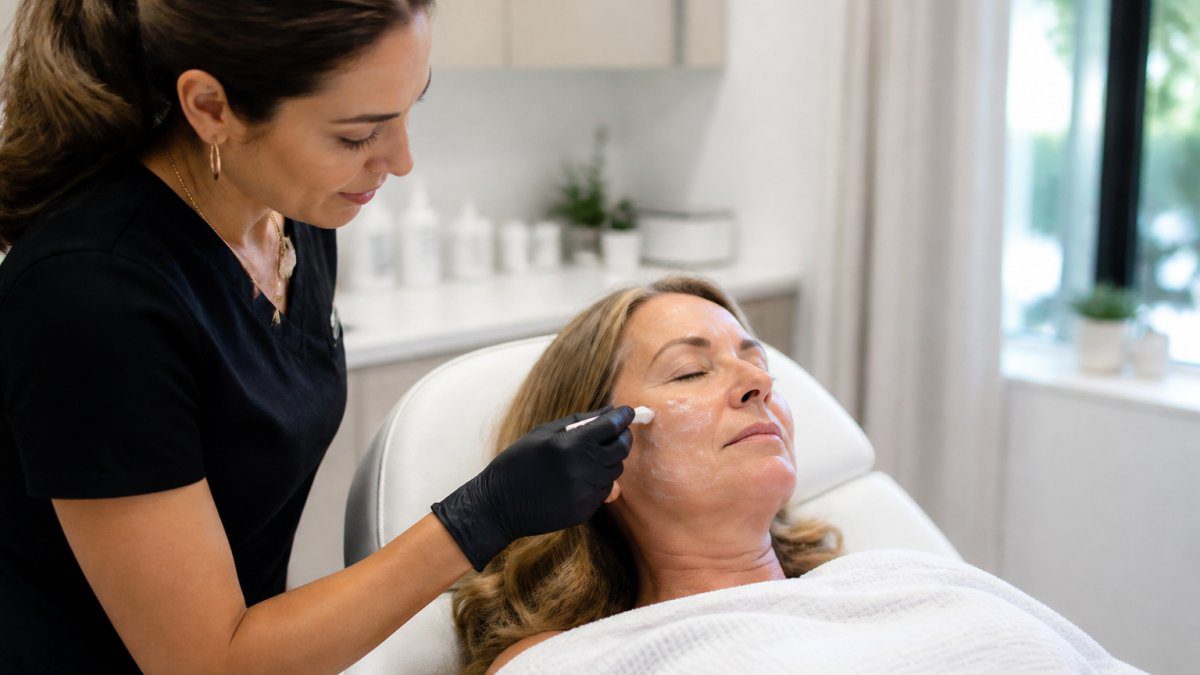
- Consultation (10-15 minutes): Your provider reviews your skin, goals, health history, and medications. This is where you should flag anxiety, prior bad experiences with needles, or any history of cold sores, since a preventive antiviral may be recommended. Ask what needle depth is planned and why.
- Cleansing (2-5 minutes): Your skin is cleansed and degreased so the numbing cream absorbs evenly. Arrive with clean skin and no makeup if you can.
- Numbing (20-30 minutes): A topical lidocaine anesthetic is applied in a thick layer and left to sit. You will feel cold and slightly numb. This is the longest waiting period of the visit, so bring headphones or a book.
- Treatment (20-40 minutes): The provider works in passes across each area, checking in as they go. Most devices have adjustable depth settings, and a provider may start shallower on sensitive zones and go deeper where skin is thicker. Speak up at the first pass if the sensation is sharper than pressure, adjustments are easier early than late.
- Finishing (5-10 minutes): A soothing serum, mask, or barrier cream is applied. Your skin will look red and feel warm, similar to a mild sunburn.
- Aftercare briefing (5 minutes): You leave with written instructions covering cleansing, moisturizing, sun protection, and which active ingredients to pause.
The whole visit usually runs 45 to 75 minutes, with the active treatment taking 20 to 40 minutes depending on the area. Plan for a low-key evening rather than a workout or a night out.
Before the first pass, consider telling your provider: “I’m nervous about pain, please check in with me after each zone.” This can influence how the session is paced.
If you take blood thinners, have an active skin infection, or are pregnant, raise it at consultation, not on the treatment table. Your provider may adjust the plan or postpone.
Here is how a first microneedling visit breaks down, from consultation to aftercare briefing.
| Step | What happens | Time |
|---|---|---|
| Consultation | Reviews skin, goals, health history, medications | 10-15 minutes |
| Cleansing | Skin cleansed and degreased for even numbing | 2-5 minutes |
| Numbing | Topical lidocaine anesthetic applied in thick layer | 20-30 minutes |
| Treatment | Provider works in passes across each area | 20-40 minutes |
| Finishing | Soothing serum, mask, or barrier cream applied | 5-10 minutes |
| Aftercare briefing | Written instructions on cleansing, moisturizing, sun protection | 5 minutes |
Microneedling Recovery Time: What to Expect After Treatment
Most people see visible redness for 24 to 72 hours, with mild swelling and a tight, warm feeling on day one. That is normal healing, not a complication. A review in the Journal of Clinical and Aesthetic Dermatology on microneedling adverse effects found that in one study of 30 subjects, 20% reported pain within 72 hours after treatment, which shows some post-treatment discomfort is expected. Sensitivity usually fades within a few days, and most patients return to normal activities the next day.
Watch out: intense pain that worsens instead of easing, spreading redness, or fever are not normal recovery signs. Contact your provider if those appear.
Microneedling Aftercare: A Simple Day-by-Day Plan
Good aftercare protects your results and keeps discomfort short. For a detailed microneedling recovery guide with day-by-day care, follow this simple schedule: Follow this simple schedule:
- Day 1: Gentle cleanser only, no makeup, avoid sun, use a bland moisturizer.
- Days 2-3: Add sunscreen, keep skincare simple, skip actives like retinol and acids.
- Days 4-7: Reintroduce your normal routine as redness fades, keep sun protection daily.
- Week 2 onward: Resume all products and protect your skin from sun exposure.
Traditional vs RF Microneedling: Which Hurts More?
RF microneedling tends to feel more intense than traditional microneedling because it adds radiofrequency heat at the needle tip. Traditional microneedling is the prickling, scratching sensation alone. RF adds a warm, sometimes sharper pulse as energy is delivered below the skin. Both use numbing cream, and both are generally well-tolerated, but patients often notice more heat with RF. Depth and device settings matter as much as the type. For an overview of the options, see our microneedling service page.
Book Your First Microneedling Consultation at Gentle Glow MedSpa
The best way to know how microneedling will feel for you is a conversation with a provider who listens. At Gentle Glow MedSpa, we tailor every session to your skin, your comfort level, and your goals, with a precision-based approach built around natural-looking results. We walk you through numbing, needle depth, and aftercare before we begin, so nothing feels like a surprise. Ready to see what a plan looks like for your skin? Review our microneedling facial service to get started. Get started with Gentle Glow MedSpa and book a consultation that puts your comfort first. You can also review microneedling pricing in Colts Neck, NJ before you commit.
Frequently Asked Questions
How badly does microneedling hurt for a first-timer?
Most beginners describe microneedling as a prickling or scratching sensation rather than sharp pain, and numbing cream applied 20 to 30 minutes beforehand takes the edge off further. A review in the Journal of Clinical and Aesthetic Dermatology found that in one 30-subject study, 20% reported pain within 72 hours of a microneedling procedure. Experiences vary widely: some people rate discomfort around 1 out of 10 after numbing, while others find it genuinely painful. Your provider can adjust needle depth and speed to keep you comfortable.
Does numbing cream make microneedling painless?
Microneedling numbing cream reduces discomfort but does not make the treatment completely painless. Topical anesthetics containing lidocaine dull the skin’s surface, and providers typically leave them on for 20 to 30 minutes before starting. You may still feel pressure, vibration, and light prickling as the device moves across your face. If numbing cream is not working well enough, tell your provider during the session so they can slow down, adjust the needle depth, or pause. Never apply additional numbing product yourself beyond what your provider directs.
How long does discomfort last after microneedling?
Microneedling recovery time is usually short. Most people leave with redness and a mild sunburn-like sensation that fades within 24 to 72 hours. Tenderness to touch can linger a day or two longer, especially on sensitive areas like the jawline or around the mouth. Follow your microneedling aftercare instructions: gentle cleanser, moisturizer, sunscreen, and no active ingredients like retinoids or acids until your provider clears them. Contact your provider if you notice spreading redness, swelling, fever, or pain that worsens after the first couple of days.
What should I do before my first microneedling session?
Before your first appointment, avoid retinoids, exfoliating acids, and sun exposure for several days, and arrive with clean skin and no makeup. Tell your provider about any medications, especially blood thinners, and any history of cold sores, since microneedling can trigger them. Skip alcohol the day before to reduce sensitivity. At Gentle Glow MedSpa, your consultation includes a skin assessment so the provider can set needle depth and a plan that matches your comfort level and goals.
Microneedling discomfort is real, but it is also manageable with the right preparation and an experienced provider. If pain has been the reason you have waited, let us show you how different a well-planned session feels. Get started with Gentle Glow MedSpa and take the first step toward refreshed, natural-looking skin.
