
Table of Contents
- Understanding Skin Changes in Your 50s
- Best Non-Surgical Facelift Options 2026
- Microneedling Benefits for Aging Skin
- Laser Skin Resurfacing Recovery: What to Expect
- Aesthetic Treatment Consultation Checklist
- Combination Therapy and Budgeting for Long-Term Results
- Conclusion
- Frequently Asked Questions
Last Updated: September 30, 2026
Understanding Skin Changes in Your 50s
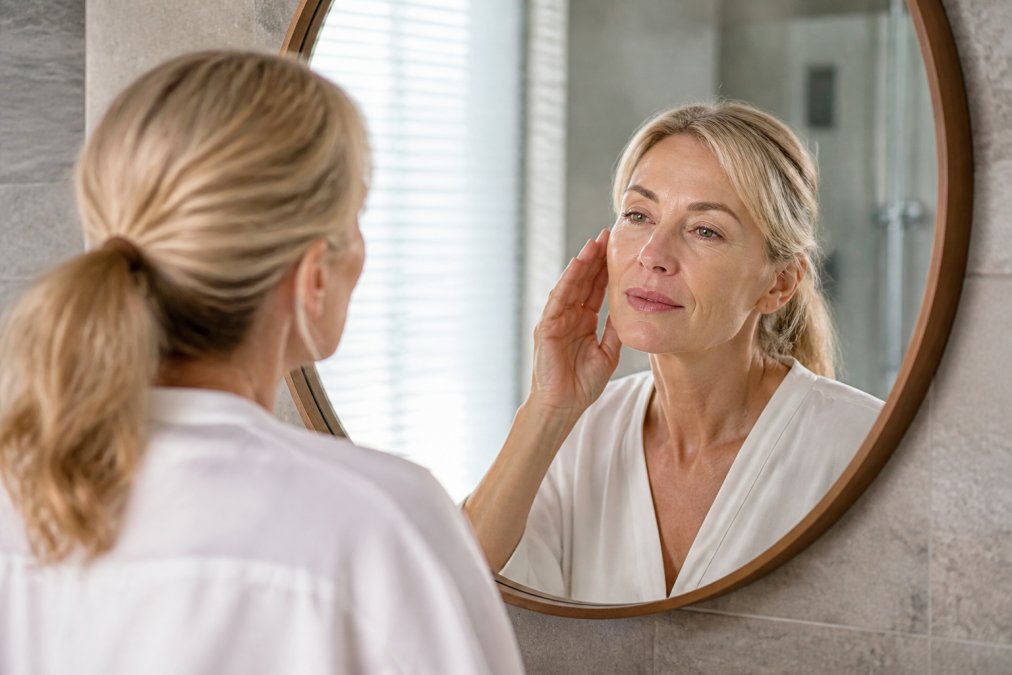
Aesthetic treatments for women over 50 work best when they address what actually changes in the skin, not just what shows in the mirror. At Gentle Glow MedSpa, we start every plan by separating three distinct processes: volume loss, skin laxity, and surface texture. Each one responds to different treatments, and confusing them is the single most common reason women feel their results look “off” rather than refreshed.
Volume Loss, Skin Laxity, and Texture
These three concerns need different tools. Volume loss responds to dermal fillers that restore structure. Skin laxity, visible as jowls and a softening jawline, responds to energy-based tightening that stimulates new collagen production. Texture concerns like fine lines and hyperpigmentation respond to resurfacing and topical treatments.
Best Non-Surgical Facelift Options 2026
The best non-surgical facelift options in 2026 are not one procedure but a combination: dermal fillers and neuromodulators for structure and movement, plus energy-based devices for firming and skin tightening. This layered approach is what separates a natural result from an overfilled one.
Dermal Fillers and Neuromodulators
Dermal fillers, most commonly made of hyaluronic acid, restore volume loss in the cheeks, temples, and mid-face. Neuromodulators relax the muscles behind deep wrinkles on the forehead and around the eyes. The art is in restraint. A common mistake is treating every line as a target rather than understanding which areas need support and which need softening. Natural-looking results come from facial contouring that respects your original bone structure.
Energy-Based Skin Tightening
Radiofrequency and ultrasound therapy devices heat deeper skin layers to trigger new collagen production without surgery. These are non-invasive or minimally invasive with little downtime, and results build gradually over weeks. They work best for mild to moderate skin laxity, not for significant sagging. Biostimulation treatments, which prompt the skin’s own repair response, fall into this same category.
| Concern | Best-Fit Approach | Typical Downtime |
|---|---|---|
| Volume loss | Dermal fillers | Minimal |
| Deep wrinkles | Neuromodulators | None to minimal |
| Mild laxity | Radiofrequency, ultrasound | None to minimal |
| Texture, tone | Resurfacing, peels | Varies by depth |
Microneedling Benefits for Aging Skin
Microneedling benefits for aging skin center on collagen induction. Fine needles create controlled micro-injuries that prompt the skin to rebuild collagen and elastin, improving skin texture, fine lines, and radiance over a series of sessions. It pairs well with topical treatments because the micro-channels help products absorb more effectively.
Laser Skin Resurfacing Recovery: What to Expect
Laser skin resurfacing recovery depends less on the laser brand than on one variable: whether the treatment is ablative or non-ablative. Ablative lasers remove the outer layer of skin (the epidermis) to resurface it; non-ablative lasers pass through the surface and heat the dermis below, leaving the epidermis largely intact. That single distinction drives everything a woman over 50 needs to know about downtime, discomfort, and results.
Non-Ablative and Fractional Options
Intense pulsed light (IPL) and photorejuvenation target sun damage, hyperpigmentation, and redness. They are not true resurfacing, they work on pigment and vascular concerns, and typically involve little to no downtime, though pigment may darken and flake for several days before it clears. Fractional non-ablative lasers create columns of controlled injury in the dermis while leaving surrounding skin intact, which shortens healing.
Ablative Resurfacing and Realistic Downtime
Ablative fractional lasers deliver more dramatic improvement in skin texture, fine lines, and sun damage, but the recovery is a genuine event. A common healing arc looks like this:
- Days 1-3: Significant redness, swelling, and a sensation often described as a sunburn. Skin may ooze or feel tight.
- Days 3-7: Re-epithelialization begins; skin flakes and peels in sheets. This is the most socially visible phase.
- Days 7-14: Pinkness fades toward a flushed tone that can persist for weeks, especially in fair skin.
- Weeks 2-12: Collagen remodeling continues; final texture and tone emerge gradually.
Post-Procedure Care That Protects Your Investment
Post-procedure care determines much of your outcome. A standard protocol includes:
- Gentle cleansing with a mild, non-foaming cleanser; no scrubbing or exfoliation.
- Barrier support with occlusive ointments or a bland moisturizer recommended by your provider.
- Strict sun protection, broad-spectrum SPF 30 or higher, reapplied through the day, plus a hat. Skipping this is the fastest way to undo results and risk new hyperpigmentation.
- Pausing active ingredients such as retinoids, alpha hydroxy acids, and vitamin C serums until your provider clears them, often one to two weeks.
- Avoiding heat and exertion for the first several days to limit swelling and flushing.
Scheduling resurfacing right before a major event is a common mistake. Deeper treatments can leave skin visibly pink or flaking for a week or more, so build in recovery time before any date that matters.
Aesthetic Treatment Consultation Checklist
A good aesthetic treatment consultation checklist turns a sales pitch into a clinical conversation. Bring your health history, your medications, and honest answers about past procedures. Ask about contraindications, expected downtime, and how results will be maintained over time.
Use this checklist at every consultation:
- List all medications, supplements, and allergies
- Disclose prior fillers, injectables, or surgeries, and when
- Ask which treatments address your specific concerns
- Ask about contraindications for your health history
- Request before-and-afters from clients with similar goals
- Confirm the provider’s credentials and who performs the treatment
- Get a written plan with expected downtime and costs
- Ask how often maintenance will be needed
Combination Therapy and Budgeting for Long-Term Results
Combination therapy protocols deliver better results than single treatments because aging happens across multiple layers at once, volume, laxity, and surface texture each respond to different tools. But layering treatments is not the same as stacking them. The sequence matters, and so does the budget that sustains it.
How to Layer Treatments for Synergistic Results
A common pattern among experienced providers is to restore structure first, then resurface, then maintain. Filling a face that has lost laxity adds weight without lift; tightening skin that has lost volume pulls it flat. So the logic runs roughly like this:
- Foundation (months 0-3): Dermal fillers to restore mid-face and temple volume, plus neuromodulators to soften the muscles behind deep wrinkles. This is the structural layer that everything else builds on.
- Resurfacing (months 3-9): Once volume is restored, microneedling, chemical peels, or laser resurfacing address skin texture, fine lines, and hyperpigmentation. Treating texture on a face that already has structure produces a more balanced result.
- Tightening (as needed): Radiofrequency or ultrasound devices for mild to moderate skin laxity, often spaced months apart because results build gradually.
- Maintenance (ongoing): Neuromodulators every three to four months, fillers once or twice a year, and periodic microneedling or light laser sessions for texture.
Building a Maintenance Budget You Can Sustain
Aesthetic treatments are a recurring cost, not a one-time purchase. Rather than chasing dramatic one-time results, spread investment across a maintenance schedule you can sustain. Preventative care started earlier often costs less over a decade than corrective work started late, because smaller interventions maintain what is already there.
| Cadence | Typical Treatments | Planning Note |
|---|---|---|
| Every 3-4 months | Neuromodulators | Highest-frequency line item; budget it as a quarterly cost |
| Every 6-12 months | Dermal fillers | Often the largest single expense; phase areas across visits |
| 1-2 times per year | Microneedling, light lasers | Texture and tone maintenance |
| Every 12-24 months | Energy-based tightening | Results build slowly; not an annual necessity for everyone |
Ask for a phased plan that prioritizes the treatments with the biggest visual impact first. You get meaningful improvement early while spreading cost and recovery across the year. If budget is tight, structure and neuromodulators usually deliver the most visible change per dollar before resurfacing.
The Emotional Side of the Investment
The emotional side deserves honesty too. Many women feel pressure to look a certain age, and that pressure can push toward overcorrection, and overspending. The goal is a refreshed version of your own face, not someone else’s. A provider who listens to that distinction, and who will tell you when a treatment is not worth the cost for your goals, is worth more than one who simply sells treatments.
Conclusion
Choosing among aesthetic treatments for women over 50 comes down to matching the right approach to your specific concerns, health history, and budget, then committing to a plan you can maintain. At Gentle Glow MedSpa, our team builds personalized plans around dermal fillers, microneedling, and laser wellness treatments, with a precision-based approach focused on natural-looking, balanced results. We tailor every recommendation to your unique skin concerns and goals, so you look refreshed rather than overdone.
Frequently Asked Questions
What is the best treatment for 50-year-old skin?
There is no single best treatment. A combination approach often works well for mature skin. Dermal fillers restore volume loss, neuromodulators soften fine lines, and microneedling or laser resurfacing improve skin texture and tone. The right mix depends on your specific concerns, health history, and goals. A consultation with a qualified provider helps determine a personalized plan.
How do dermal fillers help address volume loss in mature skin?
Dermal fillers, often made with hyaluronic acid, replace volume lost in the cheeks, temples, and lips. This restores facial contouring and can soften deep wrinkles and jowls. A skilled injector places small amounts to achieve natural-looking results. Overfilling is a common concern, so choosing an experienced provider who prioritizes balance is important.
What is the recovery time for common aesthetic procedures for women over 50?
Recovery varies by treatment. Neuromodulators and most dermal fillers have little to no downtime. Microneedling may cause redness for a day or two. Laser skin resurfacing recovery can take several days to a week, depending on the intensity. Your provider will give specific post-procedure care instructions to help you heal comfortably.
How should you prepare for your first aesthetic consultation at a medspa?
Use an aesthetic treatment consultation checklist. Bring a list of your medications, allergies, and past procedures. Note your top concerns and what results you want. Ask about the provider’s credentials and experience. Discuss your budget and timeline. Honest communication helps your provider create a safe, effective plan tailored to you.
Are there specific aesthetic treatments that improve skin texture and tone after 50?
Yes. Chemical peels, microneedling, and laser skin resurfacing can improve skin texture and tone. These treatments address hyperpigmentation, sun damage, and fine lines by promoting cell turnover and collagen production. Medical-grade skincare with retinoids and vitamin C also supports results at home. Consistency and sun protection are key.
What are the safety considerations for cosmetic procedures in mature patients?
Safety is a priority. Tell your provider about all health conditions and medications, especially blood thinners or a history of cold sores. Some treatments are not recommended for certain medical conditions. A qualified provider will review your health history and contraindications before recommending any procedure. Always choose a licensed, experienced professional.