
Table of Contents
- How to Choose a Qualified Injector to Avoid Looking Fake
- The Importance of Underfilling for Natural-Looking Results
- Dermal Filler Aftercare Tips to Avoid Puffiness and Bruising
- Dermal Filler Recovery Timeline: What to Expect Week by Week
- Managing Expectations: Reality vs. Social Media Filters
- Recognizing and Correcting Overfilled Features
- Long-Term Maintenance for a Natural Look
- Frequently Asked Questions
Last Updated: September 23, 2026
How to Choose a Qualified Injector to Avoid Looking Fake
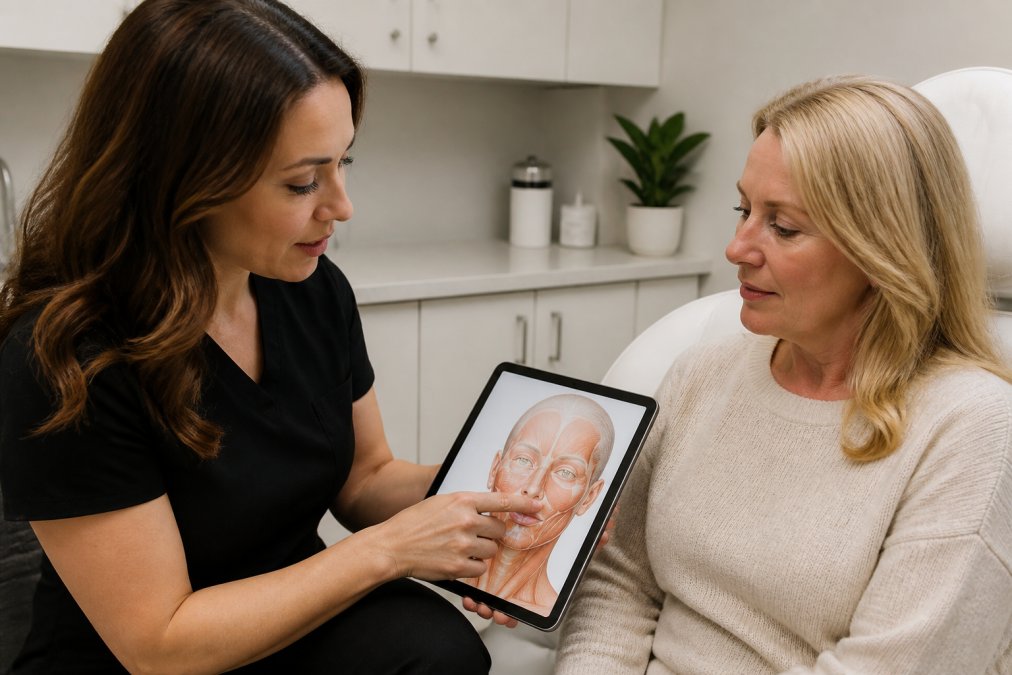
The biggest factor in how to avoid looking fake after fillers is who performs your treatment. A skilled injector knows facial anatomy, respects proportion, and will tell you when to stop.
Credentials and Training to Look For
Not every provider who offers dermal fillers has the same background. Ask directly about their training and experience.
- Board certification in dermatology, plastic surgery, or a related field
- Specific training in facial anatomy and injectable techniques
- Years of hands-on experience with hyaluronic acid fillers
- Comfort with complication management, including vascular occlusion
Questions to Ask During Your Consultation
Your consultation reveals whether this person will listen. Come prepared.
- “What’s your approach to underfilling?” (A good injector will say yes.)
- “Can I see before-and-afters of patients with my face shape?”
- “What’s your plan if I don’t like the result?”
- “How do you handle asymmetry or migration?”
The Importance of Underfilling for Natural-Looking Results
Underfilling means using less filler than you think you need, then adding more at a follow-up if necessary. It’s the safest way to avoid looking fake.
Schedule a two-week follow-up after your first filler session. Most swelling drops by then, and you’ll see the real result. Adding a small touch-up later beats correcting an overfill.
Dermal Filler Aftercare Tips to Avoid Puffiness and Bruising
Good dermal filler aftercare tips reduce swelling, limit bruising, and help results settle evenly. The first 48 hours matter most.
Do’s and Don’ts for the First 48 Hours
- Do sleep with your head elevated on extra pillows
- Do apply cold compresses in short intervals
- Do drink plenty of water to support hydration
- Don’t take NSAIDs like ibuprofen, which can increase bruising
- Don’t exercise hard or sit in a sauna
- Don’t touch, rub, or massage the treated areas unless instructed
Avoid alcohol for 24 hours. Skip topical astringents or active skincare on treated areas until your injector clears them.
Dermal Filler Recovery Timeline: What to Expect Week by Week
The dermal filler recovery timeline varies by person and product, but most patients follow a predictable path. Knowing what’s normal keeps you from panicking at day three.
When Fillers Settle and Look Natural
Most fillers settle within two to four weeks. If you still look overfilled at week four, talk to your injector. Don’t wait six months hoping it resolves.
Never massage or press on your filler to “speed up settling.” You can push product into the wrong plane, causing asymmetry or migration. Let your injector handle any adjustments.
Managing Expectations: Reality vs. Social Media Filters
Social media has warped what “natural” looks like. Many patients arrive asking for a face they saw on a filtered photo, not a face that exists. Filters smooth texture, slim the jaw, and lift the cheeks in ways no filler can replicate. Chasing that look leads to overfilling, the exact fake appearance you’re trying to avoid.
What Filler Dysmorphia Actually Is
Body dysmorphic disorder (BDD) is a recognized psychiatric condition in the DSM-5, characterized by a preoccupation with perceived appearance defects that are not observable or appear slight to others. Filler dysmorphia is the informal term for the same pattern in aesthetic medicine: a patient who keeps finding a new flaw to correct, no matter how many treatments they’ve had.
Warning Signs to Check in Yourself Before Booking
Run through these honestly before your next appointment:
- You’ve had three or more filler sessions in the past 18 months and still feel like something is “off.”
- You can’t describe what you want without referencing a photo of someone else. A stable goal sounds like “I want my mid-face to look less hollow when I smile.” A dysmorphic goal sounds like “I want to look like her.”
- You check your face in mirrors or phone cameras more than a few times a day, or you avoid photos entirely because of how you think you look.
- You’ve asked an injector for more and been told no, and you went somewhere else to get it anyway.
- The distress is about a feature other people say they can’t see.
If two or more of those apply, the next step isn’t a consultation. It’s a conversation with a therapist who works with body image, ideally one familiar with aesthetic medicine. Many practitioners keep referral lists for exactly this reason.
How to Reset Your Baseline Before Your Next Session
If you’re not in dysmorphic territory but you’ve lost track of what your face actually looks like, do this:
- Collect unfiltered photos of yourself from the last five years, ideally taken in daylight with no makeup. Not selfies. Photos other people took.
- Look at the earliest one first. That’s your reference, not the filtered version you see daily.
- Write down three features you like about your current face, in plain language. This sounds soft, but it forces your brain to process the whole face instead of the one feature you’re fixated on.
- Bring those photos to your consultation. Ask your injector to point at the specific areas they’d treat and explain what each would and wouldn’t change.
If you find yourself researching new injectors specifically because your current one keeps saying no, that’s a signal worth taking seriously. The problem is rarely the injector.
Filler can change your face. It cannot change how you see your face. If the second problem is the real one, no amount of product will solve it, and more product will usually make it worse.
Recognizing and Correcting Overfilled Features
Signs of over-treatment include a pillow-face look, heaviness under the eyes, an unnatural sheen, and features that no longer move together. If you see these, you’re not stuck.
Common signs of overfilling:
- Cheeks that look inflated rather than lifted
- Lips that protrude past the natural lip line
- Under-eyes that look puffy or blue-tinged
- A face that looks fuller but not younger
Step-by-Step Guide to Dissolving Fillers
- Book with a qualified practitioner. Not every injector offers dissolving. Ask about their experience with hyaluronidase.
- Bring your treatment history. Product names, dates, and amounts help your injector plan.
- Get a clinical assessment. They’ll map the overfilled areas and check for vascular concerns.
- Receive small test doses first. This checks for allergic reaction.
- Return for the full treatment. Hyaluronidase is injected into the filler.
- Watch for results over 24-48 hours. Most patients see softening within two days.
- Plan a follow-up. Some areas need a second pass.
Dissolving is not a failure. It’s a reset. Many patients dissolve, wait a few months, and restart with a more conservative plan.
Long-Term Maintenance for a Natural Look
Long-term maintenance is where most people go wrong. They either stop completely and lose the result, or keep adding without ever subtracting. The second pattern is more common, and it produces the look you’re trying to avoid.
Why Filler Fatigue Happens
Filler fatigue isn’t a medical diagnosis. It’s a pattern injectors see constantly: small additions stacked over years, each reasonable in isolation, that together change the shape and movement of the face. The result looks fuller but not younger, and no longer reads as the person it belongs to.
Three mechanisms drive it:
- Cumulative volume. Hyaluronic acid fillers don’t fully disappear on the timeline the marketing suggests. Depending on the product and the treatment area, residual product can remain well past the labeled duration, so new filler is being layered on top of old filler.
- Migration. Over time, product placed in mobile areas (lips, tear troughs, nasolabial folds) can shift from where it was originally injected. The face accumulates volume in places the injector never intended.
- Anatomical drift. Facial fat pads descend and deflate with age. Filler placed to correct volume loss at 35 may sit in the wrong relationship to the face at 45, even if nothing has moved.
Product-Specific Timelines to Plan Around
Exact duration varies by patient, product, and area, but these are the general ranges most practitioners work with for hyaluronic acid fillers:
| Product Type | Typical Duration | Common Treatment Areas |
|---|---|---|
| Non-cross-linked HA (skin boosters) | 3-6 months | Full face, neck, hands |
| Lightly cross-linked HA | 6-9 months | Lips, fine lines, tear troughs |
| Moderately cross-linked HA | 9-12 months | Nasolabial folds, cheeks |
| Highly cross-linked HA | 12-18 months | Deep cheek and chin augmentation |
| Calcium hydroxylapatite | 12-18 months | Cheeks, jawline, hands |
| Poly-L-lactic acid | Up to 2 years | Full-face volume restoration |
A Maintenance Schedule That Prevents Overfilling
| Timeframe | What to Do | Why It Matters |
|---|---|---|
| Every 6-12 months | Assess volume loss in person, not from photos | Catches changes early and prevents reactive over-treatment |
| Every 12-18 months | Touch-up only if a specific area has visibly changed | Prevents routine top-ups that stack volume |
| Every 24 months | Review your full treatment history with your injector | Surfaces cumulative volume you may not see day to day |
| As needed | Consider dissolving before adding | Resets an overfilled look without adding more product |
The Add-or-Subtract Decision
- Add if a specific area has visibly lost volume, the change is recent, and your injector can point to it on an unfiltered photo.
- Wait if the change is subtle, you’re within the labeled duration of your last treatment, or you can’t describe what you want without referencing someone else’s face.
- Subtract if you’ve had three or more sessions in the past two years, if your face looks fuller but not younger, or if you’ve started avoiding photos because of how you look.
Ask your injector to photograph you at every visit from the same angles and lighting. A side-by-side of year one versus year three will show cumulative change that’s invisible in the mirror.
The best defense is an injector who says “not this time” when you ask for more. The second-best defense is knowing when to say it to yourself.
Frequently Asked Questions
How long will I look strange after having fillers put in?
Most swelling and bruising from dermal fillers peak within 24 to 48 hours and begin to subside after that. By day three to five, you’ll likely look more normal, though subtle swelling can last up to two weeks. Following aftercare tips like avoiding NSAIDs, alcohol, and strenuous exercise can help minimize downtime. If you have an important event, schedule your appointment at least two weeks prior to allow full settling.
What is forbidden after fillers?
After dermal fillers, avoid touching or massaging the treated area unless instructed, and skip strenuous exercise, alcohol, and blood-thinning medications like NSAIDs for at least 24 to 48 hours to reduce bruising and swelling. Also avoid extreme heat (saunas, hot yoga) and facial treatments. Your injector will provide specific aftercare instructions based on your treatment.
Is it possible to reverse or dissolve fillers if I am unhappy with the look?
Yes, hyaluronic acid fillers can be dissolved with an enzyme called hyaluronidase. This is a step-by-step process: a qualified injector will assess the area, inject hyaluronidase to break down the filler, and monitor results over a few days. It’s a safe and effective option for correcting overfilled or asymmetrical results. Always consult a licensed professional for evaluation.
How can I choose the right injector to ensure natural-looking results?
Look for a licensed medical professional with specialized training in facial anatomy and dermal fillers. Check credentials, ask to see before-and-after photos of similar patients, and schedule a consultation to discuss your aesthetic goals. A good injector will listen to your concerns, recommend a conservative approach, and prioritize subtle enhancement over dramatic changes.